A branded lighter is a small object with an unusually large amount of federal regulation behind it. It holds pressurized flammable fuel, it produces an open flame, and it ends up in pockets, cars, and junk drawers where children can reach it. That combination means every promotional lighter has to clear the same safety and transport rules as one sold at a checkout counter. None of this should scare a buyer off, because a competent supplier handles most of it for you. But knowing what the rules actually require helps you ask the right questions, avoid a novelty shape that turns out to be restricted, and plan a shipping timeline that reality will cooperate with.
Every promotional lighter is a regulated product
The two rules that matter most both come from the Consumer Product Safety Commission. 16 CFR Part 1210 governs cigarette lighters, the pocket lighters most promotional programs use, and 16 CFR Part 1212 covers multi-purpose or utility lighters, the longer-necked kind meant for candles, grills, and fireplaces. A giveaway lighter falls under one of these two depending on its form, and the requirements are close cousins rather than separate worlds.
The regulations turn on how the lighter is defined. A disposable lighter, in the CPSC’s language, is one that cannot be refilled, or that uses pressurized hydrocarbon fuel and carries a factory selling price under about $2.75. That definition sweeps in the vast majority of printed promo lighters, which is exactly why the child-resistance standard applies to them.
The 85% rule: child resistance under 16 CFR 1210
A compliant lighter has to defeat at least 85 percent of a child test panel. Under the test protocol at 16 CFR 1210.4, the mechanism must prevent operation by a required share of the young children who try it, and the acceptance threshold is 85 percent. In plainer terms, out of a panel of children who attempt to work the lighter, no more than roughly fifteen in a hundred can succeed for the model to pass.
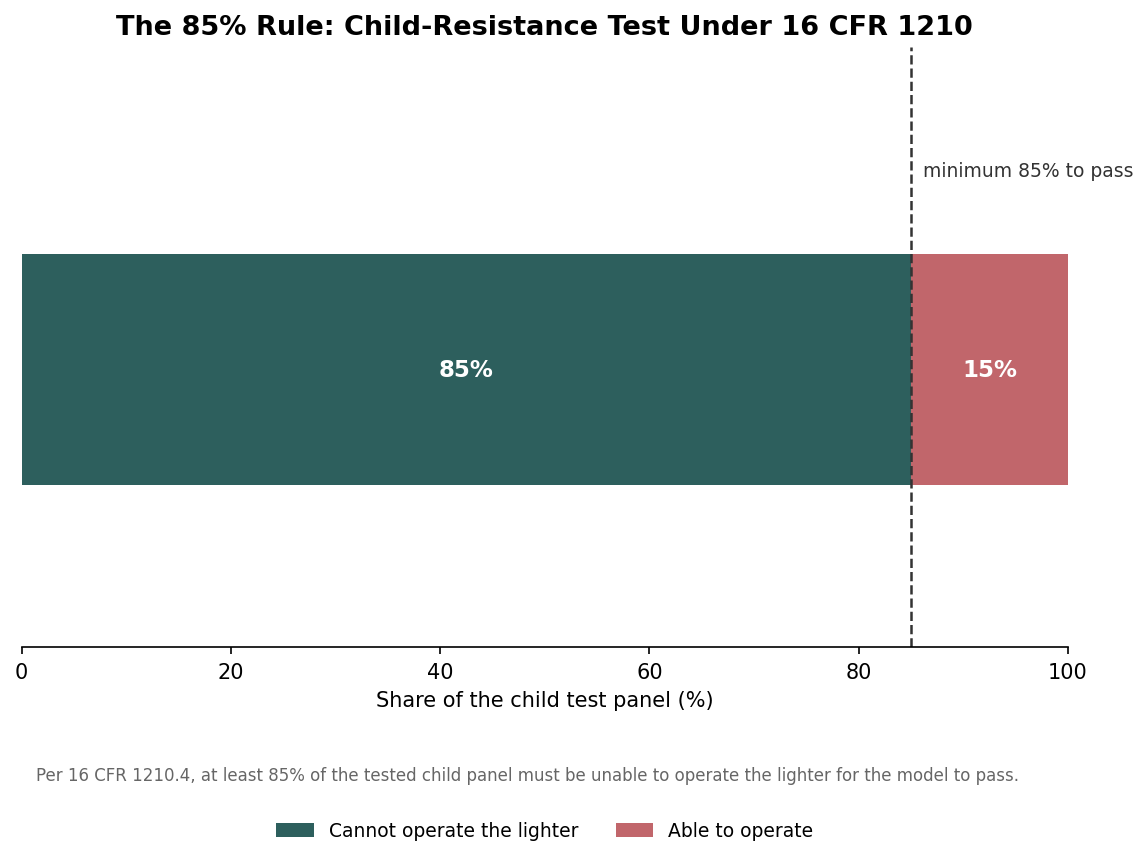
This is why nearly every disposable lighter now has a stiff spark wheel, a guard, or a two-step ignition rather than a frictionless flick. The multi-purpose rule at Part 1212 applies the same 85 percent standard through its own test section, and hands-free utility models carry extra requirements, including a manual flame-off. When a supplier tells you a lighter is compliant, this test is the substance behind the claim.
“Novelty” is a defined category, not a marketing word
It is tempting to order a lighter shaped like your product, a cartoon, or a mascot. Before you do, understand that “novelty lighter” is a regulatory term, not a description. The CPSC defines it as a lighter that has entertaining audio or visual effects, or that depicts or resembles objects appealing to children under five, such as toys, cartoon characters, or animals. Federally these are not banned, but they are held to the same child-resistance requirement as any other disposable lighter, so the fun shape does not buy an exemption.
State law is where a novelty shape can genuinely trip you up. A number of states go further than the federal rule and restrict or prohibit the sale and distribution of novelty lighters outright, and those laws vary in what they cover. If your concept leans toward a toy-like or character shape, confirm the rules in the states where the lighters will be handed out before you commit to the mold. A conventional slim or utility body sidesteps the question entirely.
Certification: the paperwork behind a compliant lighter
Compliance is not only a design matter; it is a documentation one. Manufacturers are required to submit a report to the CPSC at least 30 days before first distribution, including test data and prototypes demonstrating the model meets the standard. On top of that, Section 14(a) of the Consumer Product Safety Act requires a General Certificate of Conformity for lighters that fall under these rules.
As a buyer, you are not the one filing this paperwork, but you benefit from confirming it exists. Asking a supplier whether the specific model you are ordering is a certified, compliant lighter, rather than accepting a general assurance that “our lighters meet the rules,” is a reasonable question and a quick way to tell a serious vendor from a careless one.
Shipping: filled lighters are dangerous goods
Here is the part that most affects your timeline. A fueled lighter is a flammable-gas dangerous good, a Division 2.1 hazardous material, and it cannot simply drop into the regular mail. The United States Postal Service prohibits mailing filled lighters. Private carriers will move them, but only through dedicated ground hazardous-materials service with the training, packaging, and dangerous-goods documentation that classification demands. Standard air and passenger-service shipping is effectively off the table for a fueled lighter.
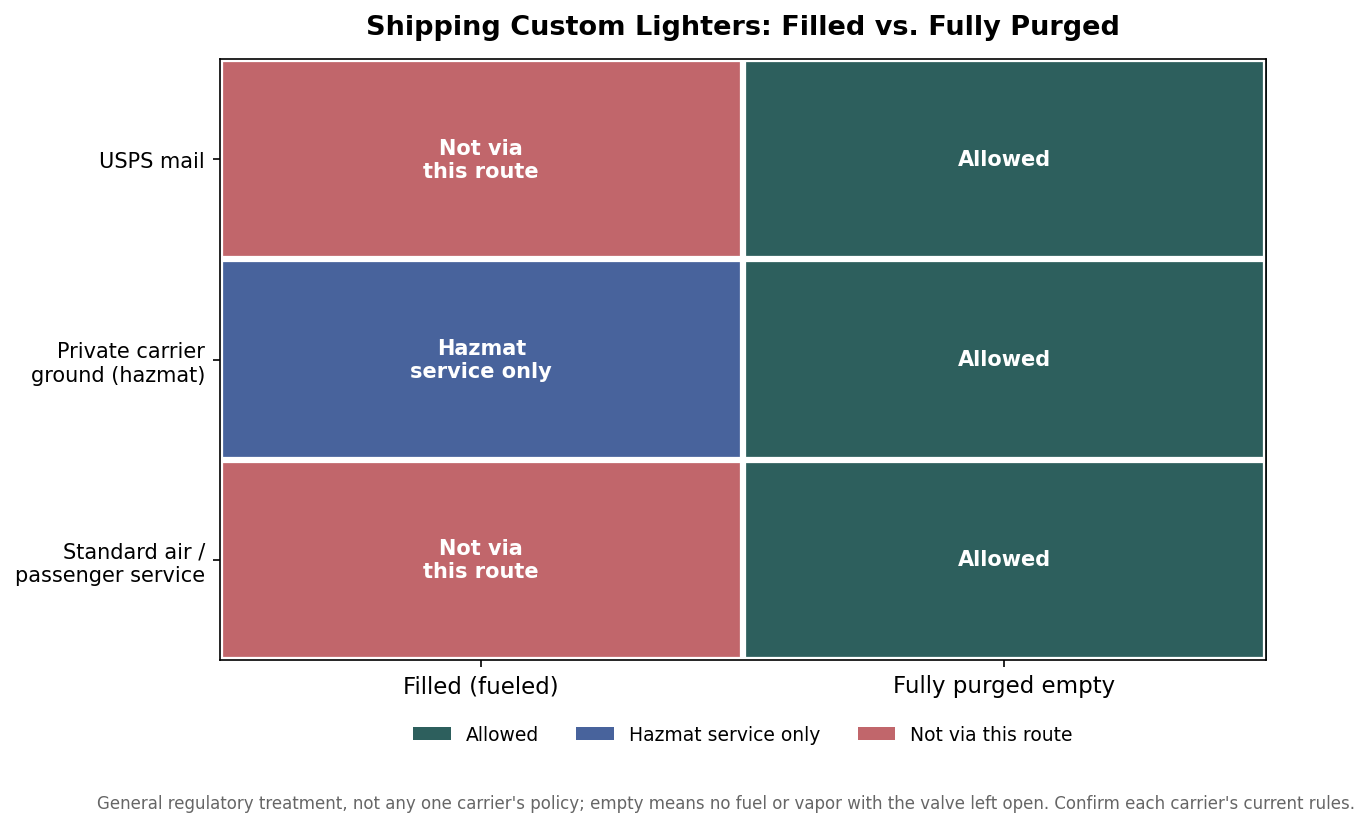
The matrix above shows the general regulatory treatment rather than any single carrier’s policy, and the details change with fuel state. An empty lighter, meaning one completely purged of fuel and vapor with the valve left open, faces far fewer restrictions and can even be mailed. In practice this rarely helps a promotional order, because you want the lighters to actually light, so plan on ground hazmat transit and its slower, less flexible timing. Build that into your lead time, order earlier than you would for a flat printed item, and confirm the delivery address is one a hazmat ground service will reach.
None of these rules make custom lighters a bad promotional choice. They make it a considered one. Pick a compliant, certified model, keep clear of a novelty shape unless you have checked the states involved, and give the ground hazmat shipment the runway it needs, and the regulation becomes background noise rather than a problem on delivery week.