Blog

  • Engraving vs. Wrap Printing: Which Custom Lighter Finish Lasts?

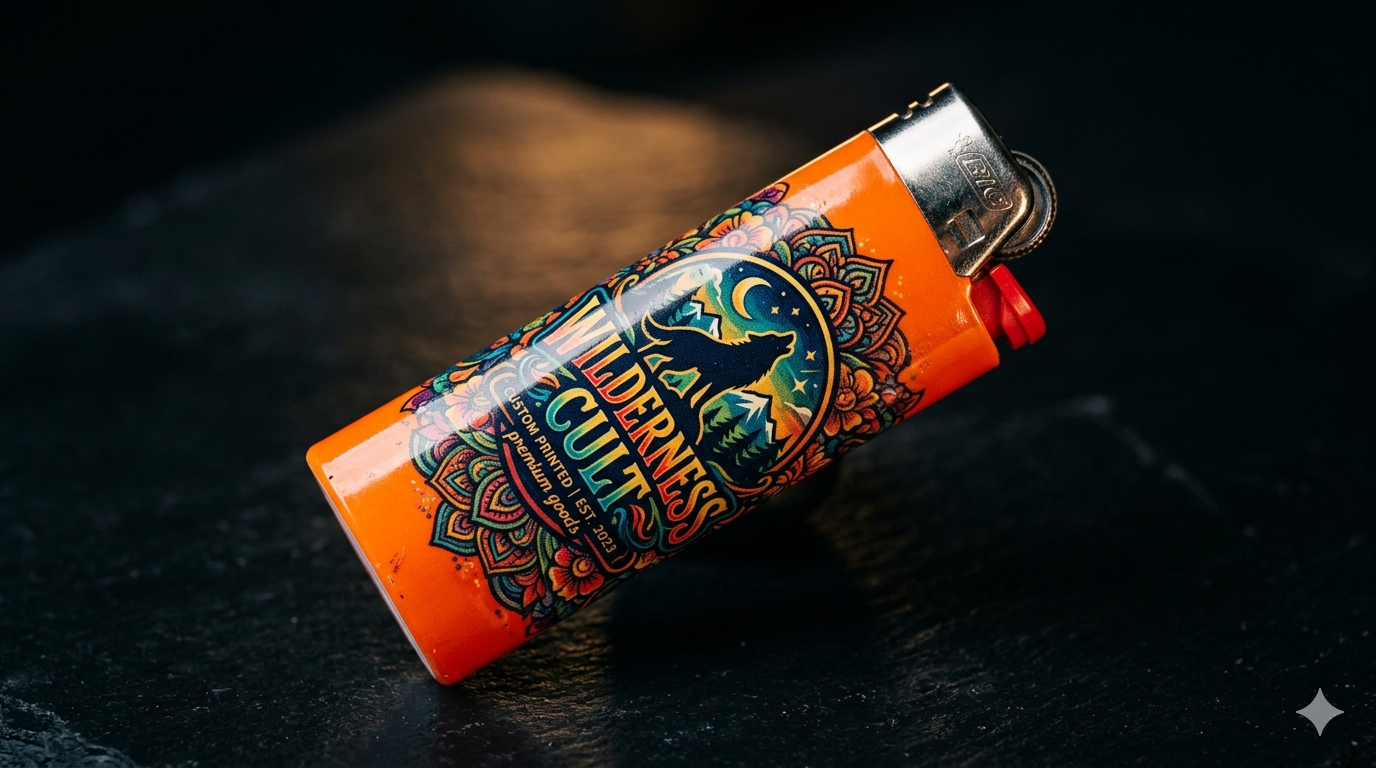
    Engraving vs. Wrap Printing: Which Custom Lighter Finish Lasts?

    The finish on a custom lighter isn’t a cosmetic decision — it’s a durability, brand-reproduction, and unit-cost decision.

    We get the same question from venue owners weekly: should we go with laser engraving on a metal body, or a full-color wrap print? Here’s what actually changes between the two, and which use cases favor each.

    Laser engraving: durable but monochrome

    Laser engraving etches the logo directly into the metal body. It cannot fade, scratch off, or wear away — the artwork is the surface itself. The trade-off is that it’s monochrome (tonal contrast only, no real color), and intricate gradients or small typography below ~6pt don’t reproduce well.

    Best for: bar & restaurant programs (the design needs to survive dishwasher splashing and back-bar wear), hotel cigar lounge gifts, premium brand teams who want a tactile, high-end finish.

    Full-color wrap: vibrant but less durable

    Wrap printing applies a sublimation print or vinyl wrap around the lighter body, giving you full CMYK color reproduction with photographic detail. You can reproduce complex logos, gradients, and small typography. The wrap will start to show wear after 200–500 light cycles in heavy use environments.

    Best for: festival and concert tour merch (the lighter is the brand artifact, not the workhorse), wedding favors (one-time use), dispensary programs where vibrant brand color matters more than longevity.

    Unit cost difference

    At a 500-unit tier, laser engraving runs ~$1.85/unit and wrap printing runs ~$2.20/unit — a 19% premium for color. At 5,000+ units the gap narrows to under 10%. For most venue programs the engraving math wins; for tour merch and dispensary brand expression, the wrap is worth it.
  • How Branded Lighters Move at Bar & Restaurant Retail

    How Branded Lighters Move at Bar & Restaurant Retail

    Branded lighters at a bar counter or restaurant host stand do something most retail items can’t — they walk out of the venue with the customer and keep promoting the brand for weeks afterward.

    Across the venues we work with, a well-merchandised counter lighter program adds $200–600/month in pure-margin revenue at a typical neighborhood bar, and 2–4x that at high-volume cocktail spots, dispensaries, and hotel bars. This piece breaks down the playbook we’ve seen work, in order of operations.

    1. Choose one anchor design

    The first order should be a single design that matches your venue’s primary brand palette — not three colorways, not a seasonal variant. You’re testing whether the program works at all. A single SKU lets you read sell-through cleanly and gives staff one clear thing to upsell at point of sale.

    2. Price for repeat purchase

    A custom lighter at $5–8 retail with $1.40–2.40 unit cost is a 3–4x markup that customers actually buy as an impulse add-on. Anything above $10 starts to feel like a souvenir and the velocity collapses. Stay in the impulse zone.

    3. Merchandise at point-of-sale, not on a back wall

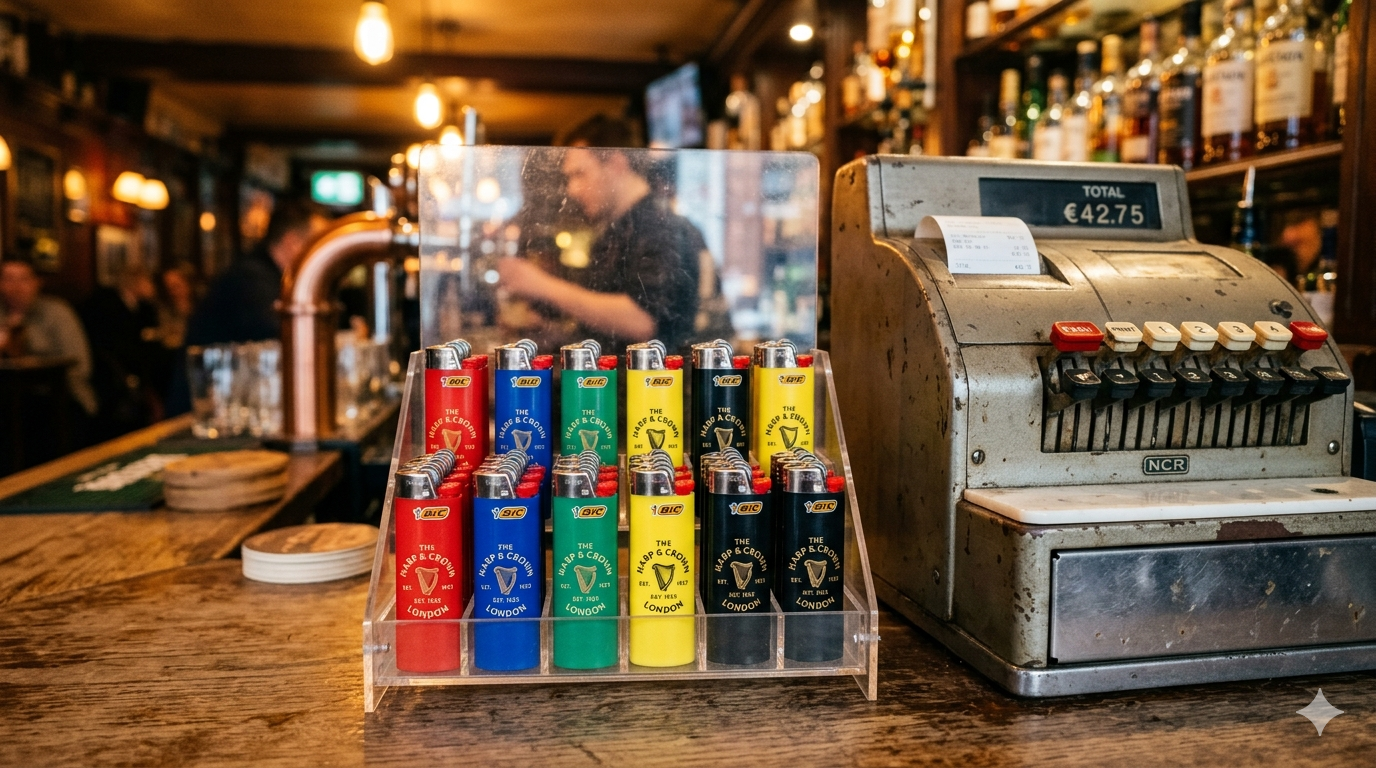
    Lighters move when they’re within reach of the register or POS tablet. The single biggest predictor of sell-through is physical placement within an arm’s length of where the customer pays. A small acrylic counter display or branded tin holds 30–50 units and replenishes weekly.

    4. Reorder cadence

    Bars that stock 50 units typically reorder every 6–10 weeks. Hotels with multiple bars and amenity placement reorder every 4–6 weeks. Build the reorder trigger into your inventory routine — when you’re down to 15 units, fire the reorder. We hold artwork on file and ship reorders in 2 weeks.

  • Hello world!

    Welcome to WordPress. This is your first post. Edit or delete it, then start writing!